
What STCA Means on a Property Listing
The three letters that show up next to a price, and exactly what they do and don't promise.
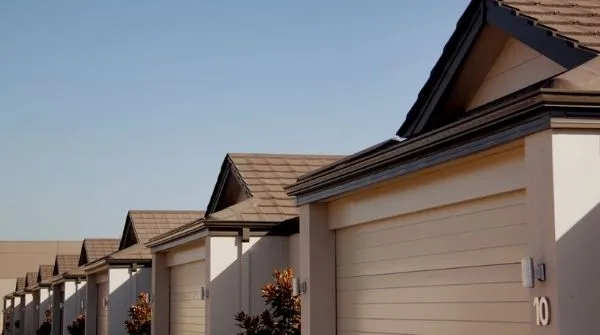
STCA is the acronym real estate agents use in Australian property listings when a site might support more than what's currently built on it: an extra dwelling, a subdivided lot, a larger footprint. Nothing has actually been approved yet. You'll usually see it in brackets: “Subdivision potential (STCA),” “Dual occupancy site (STCA),” or “Development opportunity, STCA.” It reads like a stamp of approval. It isn't one.
What STCA Actually Stands For
STCA stands for Subject To Council Approval. In a property listing it means the agent, the vendor or whoever wrote the ad believes the site could support a particular use or yield, but that belief has not been tested by the council that would actually have to approve it. What sits behind the three letters can range from a genuine, well-researched opportunity to an optimistic guess based on what a neighbour built.
Why Agents Use It
Subdivision and dual occupancy potential can lift a listing's appeal and its asking price, so “STCA” is a common way to flag that potential without the agent taking on the liability of promising it. It's a real estate marketing convention, not a term Brisbane City Council itself uses. You won't find “STCA” in Brisbane City Plan 2014 or on a council notice. It appears on the listing, not on anything council has issued.
What STCA does not mean
No development approval exists for the site when a listing says STCA, and none is implied by the term itself. Nobody has lodged, let alone been granted, a development application. The property has not been formally assessed against Brisbane City Plan 2014, and Brisbane City Council has made no decision about it at all. Whatever the ad promises (a second dwelling, a subdivided rear lot, a bigger footprint) is the agent's or vendor's own read of the property, not a council finding.
What Council Approval Actually Looks Like in Brisbane
Under the Planning Act 2016 (current as at 3 September 2026), every development in Queensland falls into one of three categories: prohibited (no application can be made at all), accepted (no approval is required) or assessable, which itself splits into code assessment (assessed only against the relevant benchmarks, with no public notification) or impact assessment (a wider assessment that includes public notification and gives neighbours a right to make a submission). Brisbane City Plan 2014 is the instrument that decides which category applies to a given site and a given proposal. An STCA claim about subdivision potential, for example, is really a claim that the site would likely fall into a particular assessment category under the current City Plan, something that can only be tested against the current mapping for that address, not assumed from a listing photo.
How to Check an STCA Claim Yourself
Before you rely on a listing's STCA claim, or pay anyone to look into it further, you can check the basics yourself:
- Get the address, or the lot and plan number, from the listing or the contract.
- Search the property on Brisbane City Council's City Plan online tool, which lets you “search for your property on the interactive map to find out which City Plan requirements apply to your site.”
- Note the zone and zone precinct shown for the property, along with any overlays (flooding, bushfire, character, biodiversity) and whether a neighbourhood plan applies.
- Compare that against what the listing claims. A zone that does not support the claimed use, or an overlay the ad doesn't mention, changes the picture considerably.
What a Planner Does With an STCA Claim
A town planner reviewing an STCA listing starts from the same public record you can check yourself: the zone, overlays and current City Plan provisions for that address. They then test the specific claim against it. That means checking site area and frontage against the relevant minimums, confirming whether the claimed use is even contemplated in that zone, and identifying which assessment category the real project would likely fall into. The output is a realistic answer, not a restatement of what the ad already said.
A Note on the Letters Themselves
STCA collides with other uses outside real estate. In aviation, STCA is Short Term Conflict Alert, an air traffic control system that warns controllers when two aircraft are predicted to breach minimum separation. In immigration law, STCA usually refers to the Safe Third Country Agreement between Canada and the United States. If a search for “STCA meaning” turns up an air traffic control safety system or a refugee treaty instead of a property term, that's why: the three letters are shared, the fields are not. This article is specifically about the term as it is used in Australian property listings.
If dual occupancy is the specific potential a listing is claiming, our dual occupancy guide covers the classification and screening figures Brisbane City Plan actually uses. If it's subdivision, Can I Subdivide My Block in Brisbane? walks through the zoning and lot-size checks in more detail. For the planning document itself, Brisbane City Plan 2014 explained shows how to read zones and overlays for any address, and if you're trying to find a property's application history rather than its zoning, PD Online is now Development.i covers that tool.