
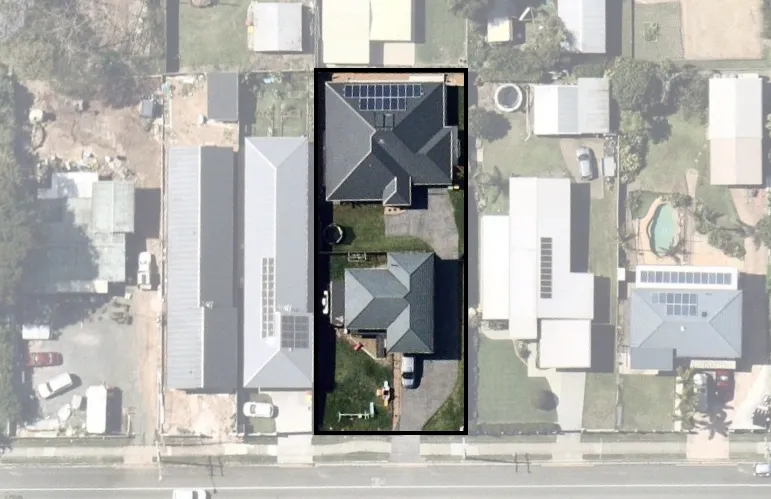
This blog focuses on understanding what exactly is a Dual Occupancy and could be an alternative to where other form of developments cannot be achieved.
Dual Occupancy is popular alternative to a subdivision as it enables a property owner to effectively resolve issues onsite through dwelling design and can assist in either maximizing the yield for a project or reducing the complexity.
A Dual Occupancy is a premises containing two dwellings on one lot (whether attached or detached) for two households. A Dual Occupancy may be a "duplex" (two dwellings with a common wall), two new freestanding dwellings or even a new dwelling built in the yard of an existing dwelling. Each dwelling is individually titled and can be separated leased or sold.
Critically, a dual occupancy or "duplex" allows for the two dwellings to be occupied by two separate and distinctive households, can be individually titled and can be separated leased or sold.
Different local governments have different rules around Dual Occupancies. Below we have compared a Dual Occupancy in the Redland City Council and Brisbane City Council to show how differently these are assessed.
Example 1: Redland City Council
Under the Planning Scheme, a minimum lot size of 400m² per dwelling typically applies for the establishment of Dual Occupancies. Accepted Development (meaning the zone does not trigger a Development Application) can be pursued where the lot size is a minimum of 800m² and the frontage of the site is great than 20m. Generally, if you meet these requirements, you can pursue either Accepted Development (meaning no development application is required). For the Accepted Development provisions to apply, the proposal is also required for the design of a Dual Occupancy to comply with all of the Acceptable Solutions specified in the Queensland Development Code part MP1.3.
If you do not meet these requirements than limited Code Assessment (being a low complexity application) may apply.
Example 2: Brisbane City Council
In Brisbane City Council, a dual occupancy under City Plan 2014 is defined as:
Means a residential use of premises for 2 households involving — 2 dwellings (whether attached or detached) on a single lot or 2 dwellings (whether attached or detached) on separate lots that share a common property; and any domestic outbuilding associated with the dwellings; but
- does not include a residential use of premises that involves a secondary dwelling.
Under City Plan 2014, a household means 1 or more individuals who live in a dwelling with the intent of living together on a long-term basis; and make common provision for food and other essentials for living.
Can I Have a Dual Occupancy on My Site?
There are number of factors that will need to be considered on whether a dual occupancy can be established on your site. Firstly, you will need to determine the zoning of your site using Brisbane City Council's Interactive Mapping.
Typically, a 'dual occupancy' can be supported if your property is located in the Low-Medium Density Residential Zone, Medium Density Residential Zone and the Character Residential Zone and will remain Code Assessment if the proposal does not the exceed the maximum height, as outlined below.
Low-Medium Density Residential
3 storeys and 11.5m in the up to 3 storey zone precinct; or 3 storeys and 11.5m in the 2/3 storey mix zone precinct (with conditions); or 2 storeys and 9.5m in building height.
Medium Density Residential
The building height specified in a relevant neighbourhood plan; where a neighbourhood plan does not specify building height, 5 storeys.
Character Residential
If in the Infill housing zone precinct, where any house constructed in 1946 or earlier is retained; no greater than 2 storeys and 9.5m in building height.
In Brisbane City Council, it is highlighted that a 'dual occupancy' in the Low Density Residential Zone is an inconsistent use with the Zone code and will trigger Impact Assessment and require public notification. In this zone it may be more appropriate to develop the site for a subdivision.
However, Dual Occupancies are supported in the higher density zones such as Low-Medium Density & Medium Density Residential.
Zoning is just one of the main key considerations when considering if a 'dual occupancy' is suitable for your site. Prior to undertaking any works, you should contact Town Planner Brisbane who will assist you with undertaking a review of your site and whether there any additional provisions that may apply to your site such as the neighbourhood plan, overlays and state government planning considerations. We can also assist you with understanding costs, the process and to seek town planning approval.
Town Planner Brisbane can assist in helping you understand if your site is in the Traditional Building Character Overlay and assist in understanding if your proposal will require a town planning approval. Contact us today.